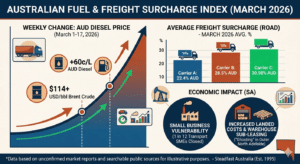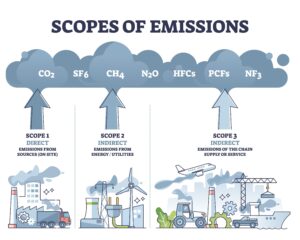
As the retail landscape in Australia undergoes its most significant shift in decades, South Australian businesses are finding themselves at the centre of a “logistics recalibration” that is redrawing the industry map. The “perfect storm” of 2026 has arrived, driven by a combination of aggressive prime rent hikes of 3.9% and the introduction of mandatory Scope 3 carbon reporting. This new era of “data-first” logistics is creating a “Quiet Cull” across the state; veteran carriers who have moved freight for twenty years are suddenly finding themselves excluded from major tenders, not because they lack the trucks, but because they lack the digital dashboards required by retail giants like Bunnings and Woolworths.
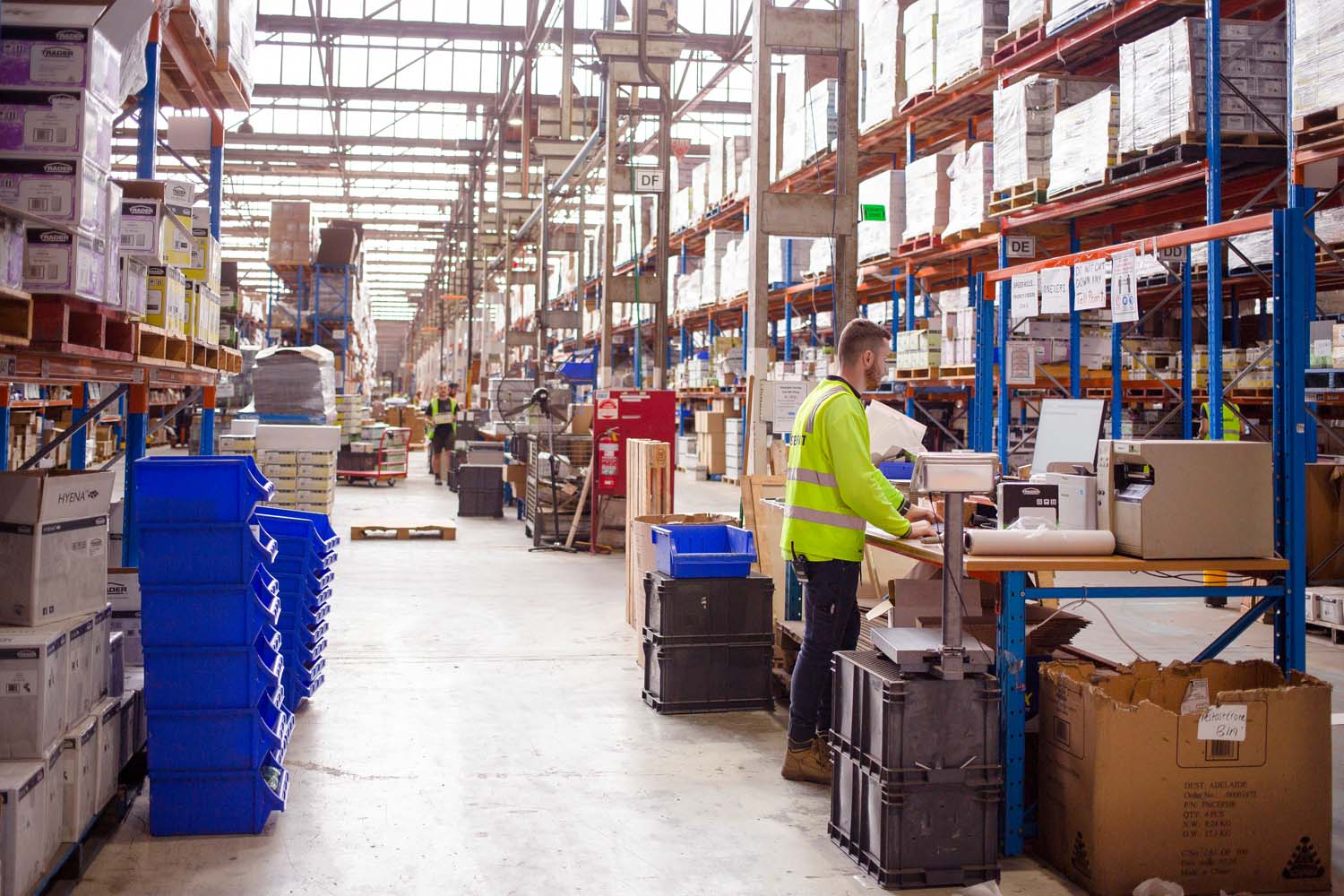
These large national retailers are moving to centralise their entire freight profiles through platforms like Machship, taking direct control of the distribution journey to drive down costs and increase efficiency. For many mid-sized companies in the Outer North Adelaide corridor, from Direk to Edinburgh, the pressure has led to a phenomenon known as “warehouse ghosting,” where businesses quietly sub-lease portions of their facilities to offset rising overheads.
Amidst this instability and the recent high-profile liquidations of several long-standing fleets, the value of a “trusted original” has never been higher. There is a profound difference between a newcomer who entered the market in 2012 and an established powerhouse like Steadfast Australia, which has served as the backbone of South Australian logistics since 1995.
With over 31 years of heritage, we have built the bridge between “old-school” reliability and the “new-world” technical integrations required for modern retail. By combining our deep-rooted South Australian expertise with “plug-and-play” Machship capabilities, we ensure our partners aren’t just moving stock—they are securing their place in a compliant, cost-effective, and future-ready supply chain.